Português

Goiás Esporte Clube and Sintonizy announce a partnership, bringing Verdão even closer to its fans.
New partnership brings Goiás to Sintonizy and offers 30 free days for the Esmeraldina fans to get to know the platform.

Suggested:

When Sintonizy decided to put AI inside the player, it wasn't just trying to ride the hype. The bet is more ambitious: to transform the app into a decision-making environment — where you not only press play, but also converse, order, create, and solve problems.
That's where the innovation comes in: ZYAI, Sintonizy's new virtual assistant.
The most striking detail—and one that the company is keen to emphasize—is strategic in the market: Sintonizy claims to be the first platform to offer a free personal assistant even to non-subscribers. If this proposition holds up, it breaks the "pay for the basics" pattern that dominates streaming and apps today.
What is ZYAI (without beating around the bush)?
ZYAI is the virtual assistant integrated into Sintonizy that understands commands in natural language, the way you write them, and executes actions directly within the music experience.
It's not just a cute chat. The logic is simple:
What ZYAI can already do as a "user assistant"
Here it begins to compete for real space in the user's habits:
Creating playlists using natural language.
“Create a workout playlist for 45 minutes, more energetic, without slow songs.”
Importing lists the way people actually write them.
Human-shaped format, common in WhatsApp or Notes: Artist – Music.
You glue it. She understands, searches, and assembles it.
Track recommendations with context
It's not just about top hits. The request can involve mood, timing, reference, and intention.
Automatic actions within the player
Play, suggest, create, add music, organize by vibe, continue a concept.
Transparent answers
When a song isn't found, ZYAI explains: what was included, what was left out, and why — instead of pushing something popular just to "avoid an empty space.".
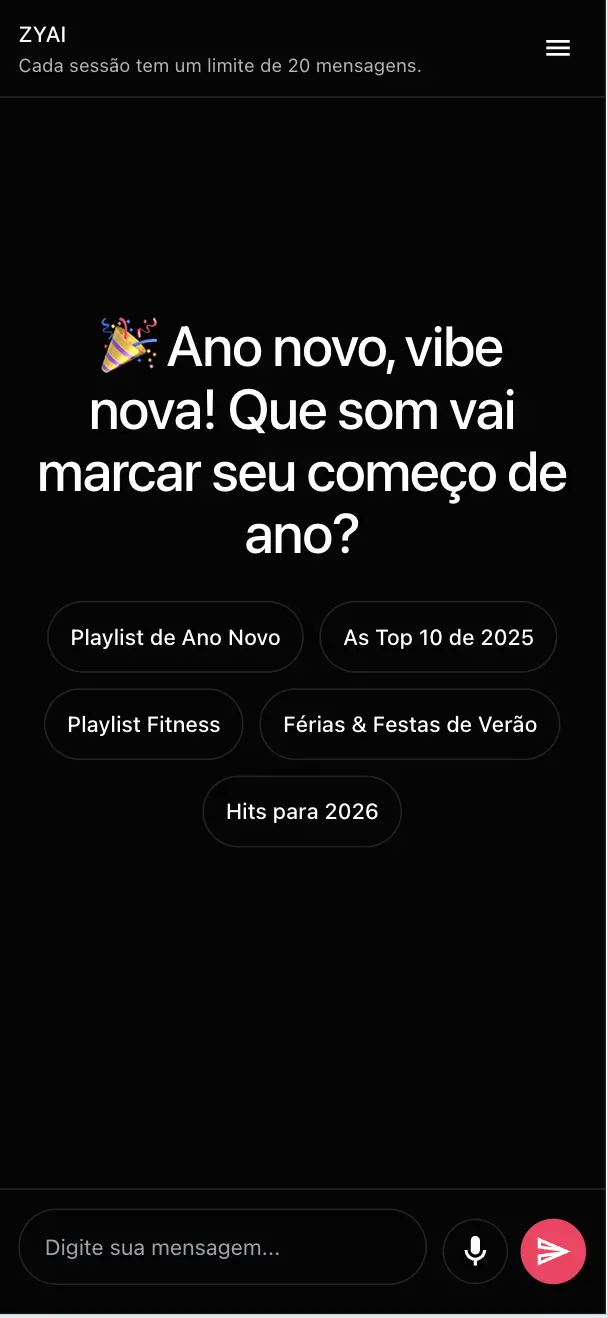
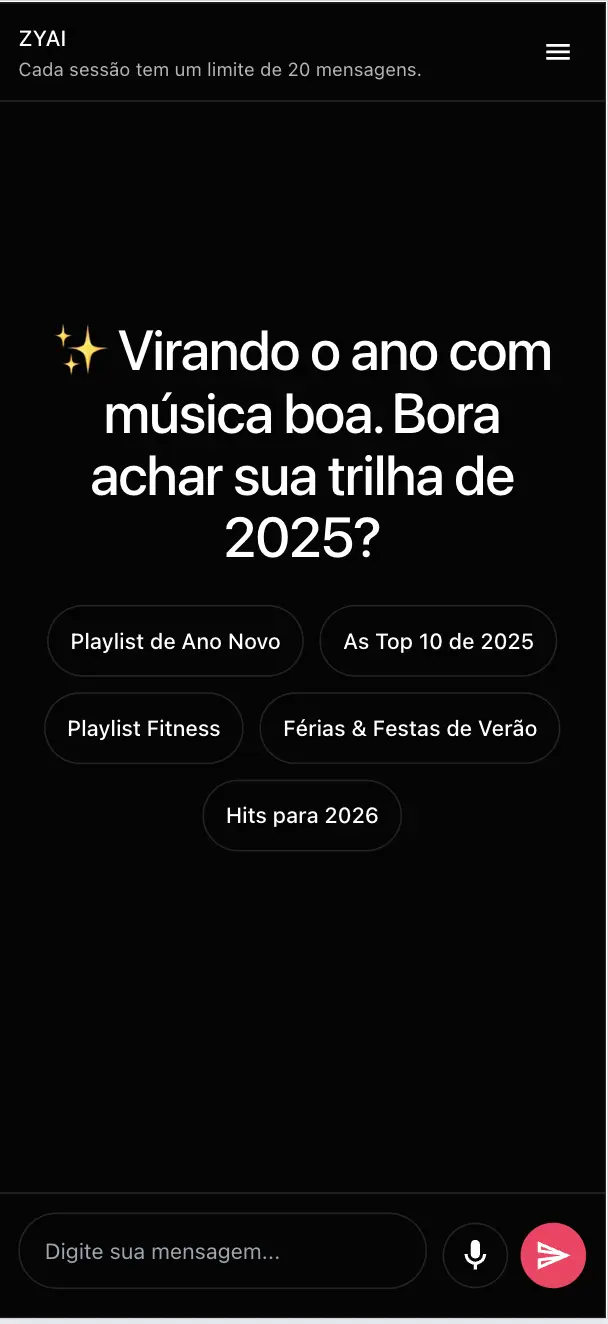
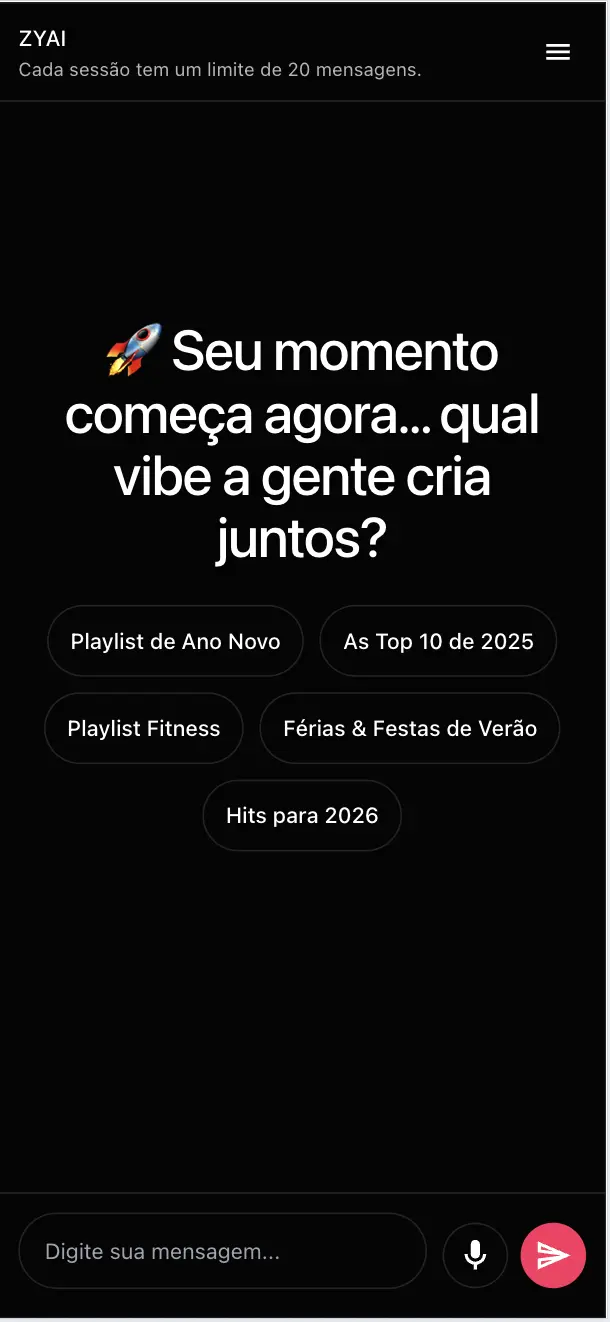
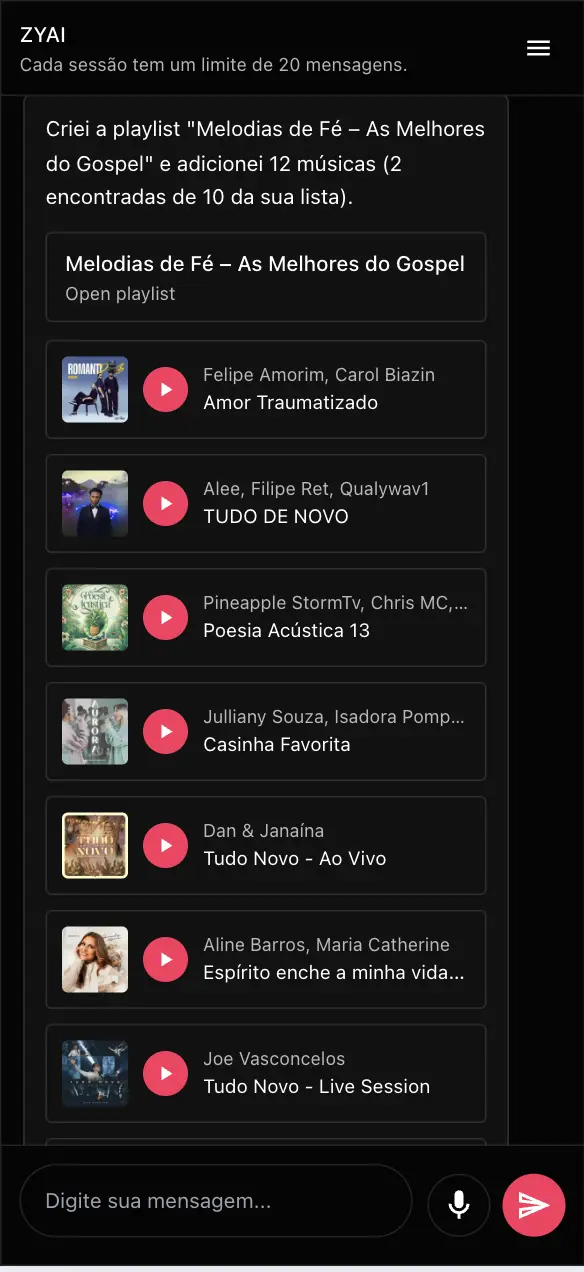
The controversial part: real progress or a crutch for lazy users?
This is where the debate begins.
The message is clear: music assistants are inevitable. The question isn't whether, but who will do it right. Traditional recommendations—carousels, editorial playlists, silent algorithms—are becoming insufficient. Today, users want control with simplicity.
But there is another, legitimate side:
Sintonizy's answer is straightforward: the user is in control, via conversation.
If it works, AI becomes a bridge. If it fails, it becomes noise.
Interview with the Founder
Next, the questions that matter — product, strategy, and 2026.
Why create ZYAI now? Isn't it just a fad?
Founder: “The trend is to have a chat that does nothing. ZYAI was born because we saw a chronic problem: people have the intention, but they waste time executing. AI needs to translate into action — ready-made playlist, found music, organized experience.”
Offering free access even to non-subscribers: is it marketing or vision?
Founder: “It’s vision. A personal assistant shouldn’t be a prize for those who pay. If AI becomes the new product interface, keeping it behind a paywall creates a two-speed internet. We want ZYAI as a gateway, not a luxury.”
What if ZYAI makes a mistake and suggests completely unrelated songs?
Founder: “We prefer to admit ‘I didn’t find it’ rather than invent it. AI that fakes accuracy destroys trust. Our focus is on transparency.”
The market is full of assistants. What makes ZYAI different?
Founder: “Applied musical context. It's not generic AI. It understands catalog, metadata, artist consistency, and playlist intent. And, most importantly, it executes.”
What is the plan for 2026?
Founder: “To make ZYAI more proactive and personal. Not just reacting, but anticipating: suggesting continuity, detecting routine patterns, helping to discover music outside the bubble — without selling empty promises.”
Practical benefits: why use this tomorrow
The bottom line: ZYAI is not a feature, it's an interface change.
The argument is simple: whoever controls the conversation, controls the product.
And conversation isn't just chat—it's about command, context, and trust.
If Sintonizy delivers on its promise, especially regarding free access and quality of service, ZYAI could mark the moment when streaming stopped being a showcase and became an assistant.
Available at Web www.sintonizy.com To download the app, go to the App. PlayStore / AppleStore

New partnership brings Goiás to Sintonizy and offers 30 free days for the Esmeraldina fans to get to know the platform.
This isn't a futuristic promise—it's the reality Sintonizy is building. More than just a music platform, it positions itself as a true digital ecosystem, where artists, fans, and brands find space to connect, create, and thrive.
No próximo 11 de outubro de 2025, a cidade de Goiânia (GO) será palco de um grande evento voltado para a promoção do auto-cuidado, bem-estar e prevenção de doenças: a I CORRIDA PELA SAÚDE, realizada pelas clínicas Zaia e Neodonto, com o apoio da Prefeitura de Goiânia e cobertura especial do portal DFATOS.